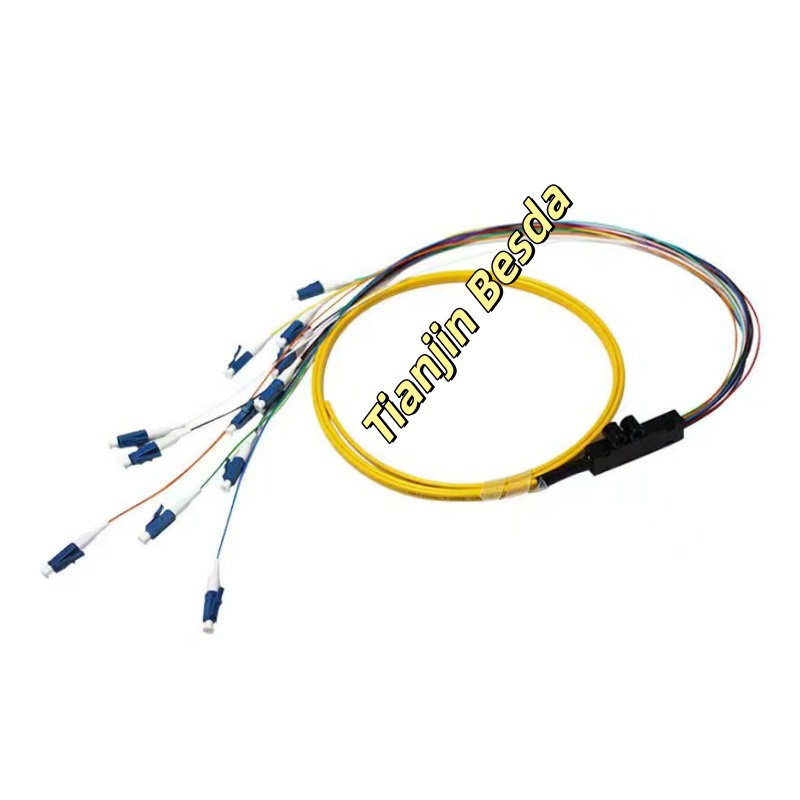
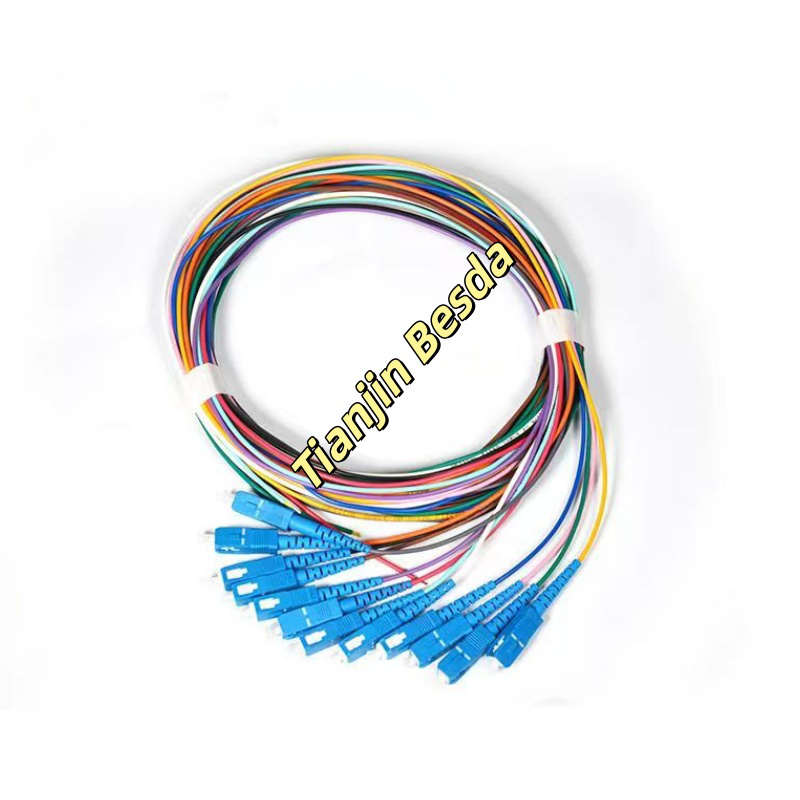
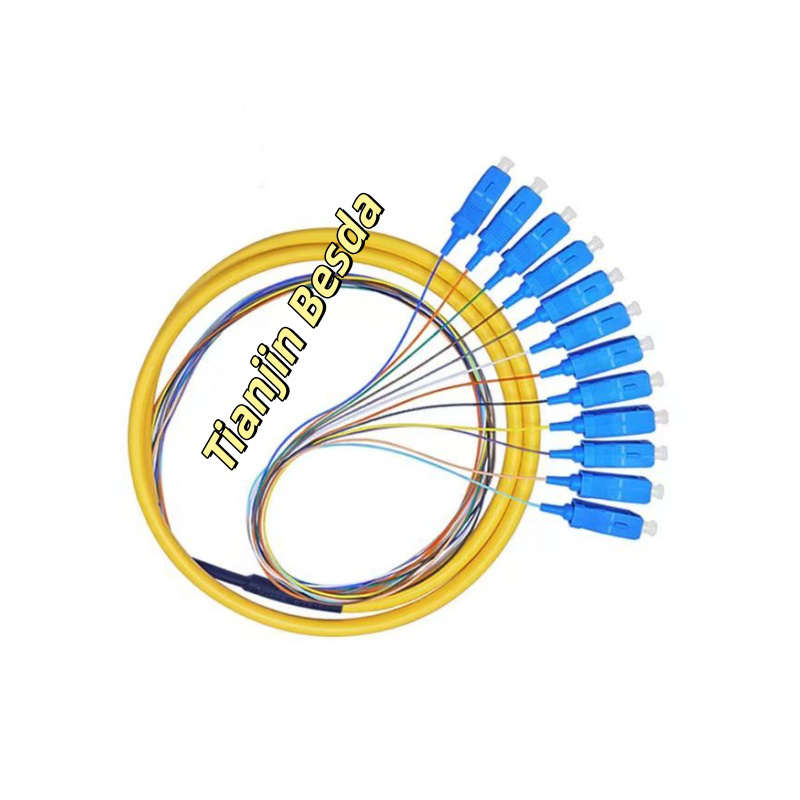
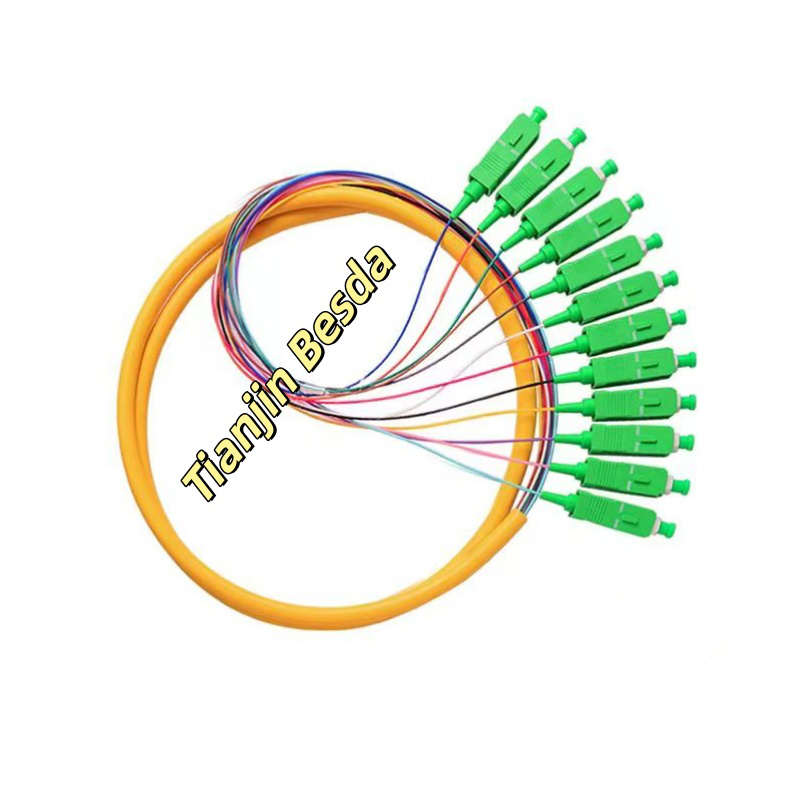
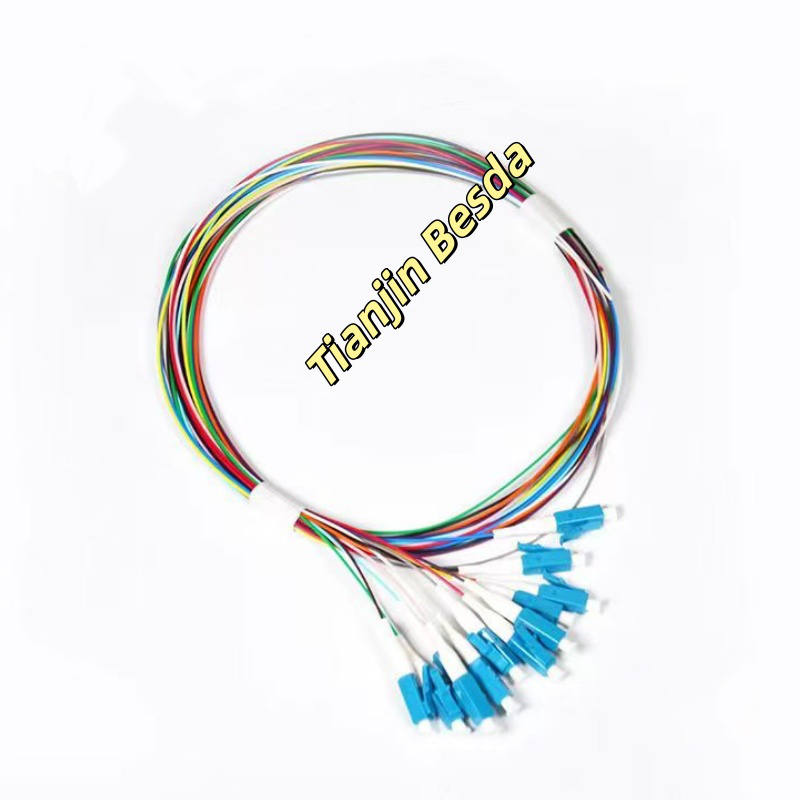
A fiber pigtail is like a "semi-finished connector cable" for fiber-optic networks.
It has a connector plug at one end for connecting to equipment, while the other end exposes the fiber core for splicing with optical cables.
1. Fiber Pigtail Features
Connector only at one end: This is the biggest difference between pigtails and patch cords, which have connectors on both ends.
Function: It is mainly used to lead out the optical fibers inside optical cables and connect them to fiber terminal boxes, couplers or switches.
Connection method: The end without a connector is usually fused and spliced with the fiber cores of the main optical cable by a fiber fusion splicer.
2. Why Use Fiber Pigtails?
It is extremely difficult to make connectors directly on thick main optical cables and will easily cause signal loss. The common operation adopted by engineers is as follows:
1. Strip and peel off the outer sheath of the main optical cable.
2. Use a fusion splicer to splice the fiber cores of the main cable with the bare end of the pigtail.
3. Plug the factory-made connector of the pigtail into network devices.
3. Common Classification
|
Type |
Full Name |
Appearance Description |
Common Application |
|
SC |
Standard Connector |
Large square port, blue/green |
Routers and modems (most widely used) |
|
LC |
Lucent Connector |
Small square port (half the size of SC) |
Switches and SFP optical modules |
|
FC |
Ferrule Connector |
Metal round rotating connector |
Patch panels and telecommunication equipment rooms |
|
ST |
Straight Tip |
Bayonet-style round connector |
Local area networks (LAN) and power monitoring systems |
4. Color and Properties
The color of a fiber pigtail usually indicates its fiber type:
Yellow: Single-mode fiber, suitable for long-distance transmission.
Orange/Turquoise: Multi-mode fiber, suitable for short-distance transmission, such as indoor equipment rooms.
- Fiber to the Home (FTTH): Splice the optical cable with SC fiber pigtails in the corridor terminal box, then connect to the optical modem.
- Data Center: Splice LC bundle fiber pigtails on ODF frames to connect the optical ports of servers and switches.
- Telecommunication Room: FC fiber pigtails are used for interconnection between backbone optical cables and transmission equipment.
